What I’ve Learned Interning at a Digital Marketing Agency for Three Weeks

Just starting second year at Manchester Met University, I have been interning at Mosquito Digital for three weeks now as part of a unit called ‘Agency Life’. This is a six-month long work experience in which we choose a company to work with as part of our course and then work as an intern under a mentor’s guidance.

There was a good handful of companies involved in the unit, but Mosquito Digital felt like the right fit for me right now. An award-winning digital agency, the in-house mentor had a ‘tell-it-like-it-is’ approach to communication and made it clear there would be no spoon-feeding. This is exactly what I was looking for: a challenge.

Life Gets Mucky, Turtlewax UK, Mosquito Digital Client

There are students that go to Uni to better their lives, of course, but they’re not willing to really work that hard for it, and there are those who get stuck in and are motivated to soak everything up. This is me.

And an award-winning straight-talking no-spoon-feeding digital marketing agency was exactly what I wanted and needed.

I started three weeks ago, three weeks earlier than the rest of the course, as projects were under way and it was all hands on deck. This is what I’ve learnt so far about interning in a digital marketing agency:

  1. It’s a welcoming atmosphere. Yes, Mosquito have won awards and are a fantastic agency with big clients, but they’re still human beings. They understand that everybody starts somewhere, and they most probably started out as graduates themselves.
  2. It can be stressful. Because you are working for a client, certain demands need to be met. There are deadlines, so many deadlines, and there is so much work that goes into one project, and it needs to be done with great quality.
  3. You don’t photocopy things. I’ve literally not touched a printer or a kettle in the office, because I’m not lumped with doing pointless jobs around the place. Researching, writing articles, social media marketing and updating the back end of a new website have been some of my jobs over the past three weeks.
  4. You get to see things before the public. It is so exciting to see something as it is being made, still in its early form with its bugs and wrong colours. Of course everything is confidential, but getting to see these prototypes makes you enthusiastic about getting that project out for the client.
  5. It makes you excited for the future. Although you’re not a permanent fixture, it makes you excited to think that when you graduate you could work in a digital marketing agency full-time, and actually make a living from it!

If you’re wondering whether Agency Life or unpaid work is worth it, just think about when you graduate. Literally thousands of young people with the same degree is going to be applying to the same places you want to work. And the only thing that puts you ahead of the competition will be your experience. Do as much as you can, and never take the easy route.

How Different Brands Have Tucked into #GBBO

Let there be cake! How brands have jumped onto the Great British Bake Off love.

The beloved baking show attracts between 12 and 14 million viewers and is as important to supermarkets and kitchenware brands as Christmas and Easter. On launch day of #GBBO the hashtag was trending on Twitter and a variety of accounts were tweeting. It was really interesting to see how totally different brands linked the bakery programme to their own brand.

BBC Radio 4

Being a radio show which revolves around intellectually-stimulating conversations about interesting topics with interesting people, they shared conversations with the people of #GBBO. On launch day they tweeted stories such as ‘working with Mary Berry is like working with the Queen’ and previous winner Nadiya discussing the magic of baking. They did share a recipe for banana bread, but Radio 4 are all about people primarily, and so chose to tweet about the faces of #GBBO.

14124046_10154575991591055_494377068_o

Telegraph TV & Radio

Being all about news in TV, they chose to focus on the people, in particular the contestants. One story looked back at the best moments of #GBBO, and meet the contestants in the upcoming series.

14087469_10154575991531055_1886189424_o

The Drum

Huge marketing website The Drum chose to look at how brands have used #GBBO to push their products, and you might find it especially interesting to find out supermarkets plan their campaign 12 months in advance. They also did a really clever piece on if they took over Mary Berry’s social accounts.

14152092_10154575991451055_2088613625_o

The Happy Foodie

‘Cookbook addicts’ The Happy Foodie really stuck into #GBBO with recipes such as Paul Hollywood’s pizza pie and Mary Berry’s malted chocolate cake, accompanied by gorgeous pictures. They had a playful poll on how to pronounce the word ‘scone’, with 53 votes by the time this article was written.

14114508_10154575991316055_1480092920_o

Tandem Coffee House

This small Stockport coffee house chose to promote its cakes with pictures and tagging their friends Silver Apples Foods bakery to showcase their cake creations.

14087213_10154575991246055_764307036_o

Some of the best live commentary of the show came from Innocent Drinks, The Telegraph, and Buzzfeed published an article on their love for Val.

How The EU Referendum Was An Embarrassment To PR

‘Scaremongering’ has been the most popular term used in the media to describe the EU Referendum campaigns over this last month. Instead of facts and logical debate, we were served frightening threats to our jobs by the ‘hysterical’ Remain side, and pure racism from the Leave side. While the Remain was dubbed ‘Project Fear’ for instilling panic into the public by warning of the possibility of World War 3, anyone who dared speak out as a Leave supporter was labelled ‘racist’ and ‘selfish‘.  Not only was the communication of the debate misleading and downright embarrassing, but the way the public reacted was despicable. In the end, an MP lost her life, the Leave voters realised they were promised a lie, and the level of hate crime has since risen by 57%.


Contently lists anger and fear as two of the six emotions that can influence in advertising, and it looks like these were the only focus of the debate. In a referendum that determined the future of the country, the government chose shock advertising. Rewind to 2012 when the Leveson Inquiry was set up to regulate the press in the wake of the phone-hacking scandal, and it makes you wonder how did it get to this? The media circus that surrounded all this was alight with lies and only added to the turmoil.


british flag.jpg


Last year PR Week published that 70% of the public don’t trust PR practitioners because ‘they lie’. Practitioners have been trying to remove themselves from the ‘spin doctor’ image, but this recent campaign seems like a huge step backwards. And since the result on Friday, it has only grown worse. Within hours the value of the pound decreased and moral panic began – the prime minister stepped down, Nigel Farage admitted that most of his campaign was a mistake lie, Corbyn’s party disbanded and stories of racial abuse started to circulate.


Is it any wonder that 64% of the 18-24 generation, the ones who would live with this decision, didn’t actually vote? Yik Yak was full of Manchester students unsure of which way to vote, not knowing what to believe, all trust in the country’s leaders lost. Buzzfeed had a live stream on Facebook with David Cameron in which a girl basically told him to fuck off, and Channel 4 screened a total shambles debate where media personalities didn’t really seem to know what they were talking about. There was even a live stream on Facebook from Bite the Ballot where a hip hop artist rapped about the EU Referendum, and I cringed as the number of viewers dropped rapidly. It’s less about being ‘down with the kids’ and more about just answering questions with real facts.


In conclusion, the same ‘spin’ and propaganda that gave Public Relations a bad name in the past was dug up during this referendum, and the media circus is not leaving town soon. Preying on the public’s fears, lying and inspiring hate has only distanced the people from their leaders. I only hope the future of PR in politics will learn from this.

What You Can Learn From Free Burritos

Last week Manchester’s newest burrito chain Chilango opened up its restaurant on Oxford Street to a queue of hundreds of people, predominantly students, who were waiting for one thing and one thing only: free burritos.

The Manchester Evening News had stirred excitement with the promise of free burritos all day and, as poor students coming to the end of their academic year, this was a dream come true. Among students it is consensus that there are only two ways to perfect happiness, and that is either pizza or burritos.

From before the doors opened at 12pm, the band started up on the corner (face-painted with sugar skulls) and the queue began. People were recording their wait on Snapchat and Twitter, dancing to the music and whatsapping their friends desperately; “where are you?! The queue is moving! Quick!”

At the door customers were given a menu for future visits, and they got to admire the brightly coloured graffiti and posters inside while a girl passed down the queue to keep up the morale and tell people what they could order. Mexican wrestlers and dancers then entertained the crowd, and the service at the counter was record fast (27 seconds). At their tables, people were taking photos and sharing on social media their free meal of the day. After they had eaten, customers were often a taste of nachos and dips on their way out, and then they were tweeting their experience.

All in all, this event has given the new restaurant a mammoth of exposure on its first day. What can be taken from Chilango’s success is that the event must have enough to keep people interested and to share on social media. Not only for the purpose of social media, but it must be something that customers will be getting their friends to go with them, an experience that the group can each share, and this will mean more social media marketing between them, free publicity.

DO PEOPLE REALLY PREFER TO BUY FROM ETHICAL COMPANIES?

Last month the biggest data leak in history exposed how the wealthy have been keeping their taxes nicely hidden in offshore law firm Mossack Fonseca, instead of paying them like the lower working class folk of the country. And after it was revealed that David Cameron’s father had dealt in tax evasion with the firm in the past, the Prime Minister found himself revealing his financial details in a bid to regain the public’s confidence. Even though he was quick to cool the public’s anger, their trust in him has decreased to 21% compared to 29% in February, whereas the trust in Jeremy Corbyn has risen from 26% in February to 28%.

It is clear from this crisis (if the 5000-strong protest in London for Cameron to resign is to be considered alone) that people don’t like secrets and don’t like being lied to, and a company does so at their own peril if they choose to pull the wool over their customer’s eyes.

For a client project with a company well known for its transparency, cosmetics brand Lush, research group Banana Moon asked students at Manchester Metropolitan University questions on product quality, company policies, and company reputation to identify whether a company’s corporate social responsibility and sustainability policies affect buyer behaviour.

With consistent ethical behaviour comes increasingly positive public image, and a lack of corporate social responsibility, by comparison, may damage a firm’s reputation and make it less appealing to stakeholders. A positive moral image will lead to long-term growth, cost and risk reduction, and an anti-capitalist sentiment among other benefits.

The Results

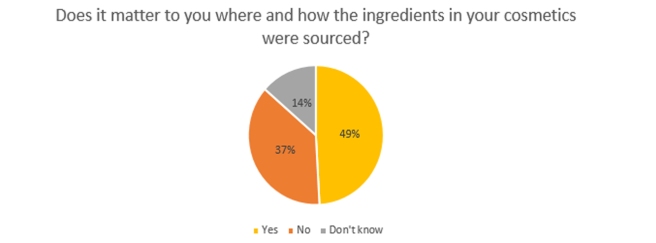
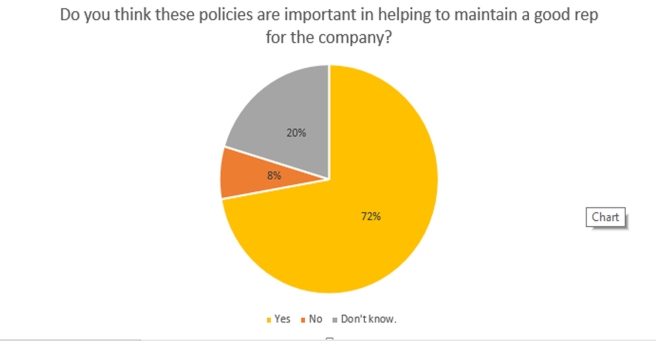
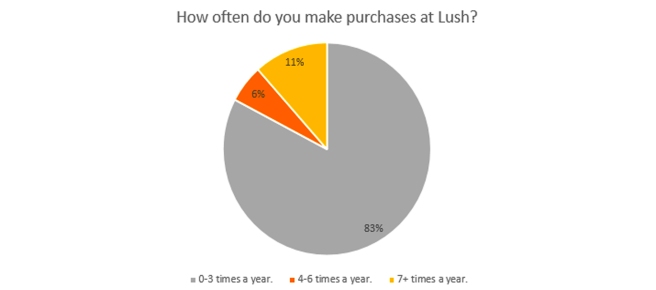
59 students answered the survey, 83% shop at Lush 0-3 times a year, stating that the main reasons for choosing this company are that they like the products (41%) and they like that Lush don’t test on animals (30%). Just under half (49%) claimed that it does matter to them where the ingredients are sourced, and 37% claimed that it doesn’t matter to them. When it came to company reputation, 72% claimed that having ethical policies helps to maintain a positive image (although the majority of respondents don’t know any specific policies).

ingredients sourced

50% of respondents claimed that they would pay more for a brand with an ethical reputation, and 45% claimed that it really depends on the quality of the product. The survey also revealed that respondents shop at Superdrug and Boots which offer cosmetic brands at a cheaper price. They also claimed that the ethical and sustainability policies of these cheaper cosmetic companies don’t affect their buying behaviour here. This could suggest that ethical and sustainability practices are benefits expected of a higher cost product and not expected of a lower cost product.

policies important

The results show that customers do consider a company’s reputation in terms of their ethics and sustainability practices. With the analysis on students, 95% aged 18-24, it could be argued that they are on a budget with little disposable income to spend on bath and shower luxuries, and the majority shopping at Lush 0-3 times a year, they see the brand as a ‘treat’ further distinguishing it as a luxury.

often you make purchases

The survey concludes that the corporate social responsibility and sustainability practices do affect buyer behaviour, but the customer may be forced to prioritise product cost if they are on a budget regardless of their ethical standpoint.

Jess Pagan

HOW TO MARKET WITH MOBILE

NEAR-FIELD MOBILE MARKETING

Allows brands to adapt their messages based on where consumers are geographically. An example of this is its use within shopping centres to sign into Wi-Fi; consumers can then opt into promotions and advertising of the shops inside that shopping centre.

It uses network to establish where the consumer is then sends a notification stating they are either near the store; there is an offer available in the shop and whether there is an exclusive offer available.

A company using it well is Uber because it will recognise your location and allow you to select a taxi to pick you up at that location. Starbucks will also recognise where you are and send you a notification stating which shop you are near and whether there are any offers.

Cadburys could use this technique to offer a virtual tour around their factory or to send consumers offers in conjunction with other shops, such as supermarkets.

MOBILE GAMING

Micro-transactions are used within mobile gaming so companies can make money off ‘free’ games. There are also many adverts integrated into the game, which a consumer can usually pay to turn off. The company is either making money through the adverts, or from people paying to turn them off, so either way they are not losing out.

An example of a mobile game is Candy Crush Saga; once all lives are lost, the user can either wait 30 minutes for one life or buy five for 69p. As this is not a lot of money many users will generally buy the additional lives, or buy power ups.

Cadbury’s could integrate adverts into online games to advertise their products or offers. Or create a game where you can run the chocolate factory, similar to Simpsons tapped out, which starts off small and keeps growing depending on how much time/effort/money a user puts into it.

SNAPCHAT

Snapchat allows the user to send pictures to friends that only last a short amount of time (10 seconds max) or update their story, where each picture or video lasts 24 hours. It makes life easier as it enables the user to send pictures straight away, without having to access the camera, save the picture and then go back to another app, such as Facebook to send the picture. Users can also use it to send the same picture to multiple friends at once.

Businesses such as Sky News, Sky Sports, IGN, Cosmopolitan, Mail Online, Buzzfeed, MTV, National Geographic and the Food Network use it to engage with their audience and advertise what is on their website or within the news; this then drives traffic to that website. Cadbury’s could use this to show news, new chocolate bars or seasonal gift ideas, or recipes that use Cadbury products.


INSTAGRAM

Companies use Instagram to advertise their products in picture format and usually put a link to their website where the user can purchase the product. It is easy to use and users can follow specific pages and businesses so the user does not get things appearing on their feed that they are not interested in. The user can then like, comment or repost the picture that they originally saw. Topshop use this a lot to advertise their products and always refer back to the website, they have 5.7 million followers so can reach a high audience.

LET’S TALK ABOUT EMAIL

 Email marketing has become one of the prominent marketing tools of the 21st Century. Why? According to Harvard Business insider direct mail marketing costs over $600 per 1000 pieces; it costs virtually nothing to send emails. Whilst the cost of Direct Mail marketing is 600 times more, results and customer response do not reflect this massive cost difference.

This table from Harvard Business looks at the response when a retailer “took a group of 105,000 customers in its loyalty club database, divided them into three groups of 35,000, and marketed to the three groups differently.” 

These results show that the minuscule difference in response rate and the dollars made per name, between Direct Mail and Email do not reflect the cost difference.

HEROES EMAIL MARKETING PLAN 

For DMMP the Blue Milk Digital team had to design an example of Email Marketing, BMD decided they would use Cadbury’s Heroes as their product, as the company has a similar ethos to BMD and the Christmas theme also coincides with the time of year.

The team decided first to find examples of Email Marketing from their own Email inbox’s; there was no shortage of inspiration. BMD began by creating a rough template with pen and paper which could then be easily translated into a digital format. Although simplistic, this method proved effective.

BMD split into two sub-groups, this allowed one group to focus on text and the other to focus on design and on the layout of the email.

The text sub-team agreed that the language should compliment the product as well as grabbing the attention of Heroes target audience. This was done by including phrases such as ‘Save the day’ and ‘keep the family satisfied’.

The design group, after studying other examples of Email Marketing decided it was vital to include – Social Media links, Hyperlinks and smallprint such as terms and conditions. The design team also came to the conclusion – colour schemes are vital whilst designing the email.

This led the design sub-team to including all of the above, as well as a purple colour scheme to compliment Cadbury’s iconic purple logo.

To further add to the Email, whilst researching other Emails, the team noticed that banners were employed in almost all of the emails they studied. This led the design team to creating a banner on befunky.com.


Below is the finished product of BMD’s Email Marketing piece:

BLOGGERS ARE EVERYWHERE IN THE WORLD OF DIGITAL BUSINESS, BUT WHAT MAKES A BLOG GOOD?

A blog is a source of information and inspiration; packed with pictures and bitesize quotes. Blog posts can be a business’ mouthpiece, written to inform, engage and succeed. Blue Milk offers a visual source of content with the professional reliability that is the backbone of any marketing agency.

HOW THE PROFESSIONALS DO IT

E-consultancy has a wealth of information and news vital to the professional marketer, and has a great layout; trending posts are in a side column, a big widget for readers to input their email address – they can subscribe while they read! – and the blog posts are split up with headings, and include links and visual examples. With popular websites come pop-ups, and E-consultancy hosts big adverts down the side columns, this can be a distraction to readers.

Wired is a varied, visual blog with subjects on business, design, entertainment, gear, science and security. There are social icons on the side so that blog posts can be shared, latest news is shown in a side column, and quotes stand out in big bold lettering. It’s a very smart blog and visual; links are underlined in blue in a unique neat way. Wired is a great source of content, but blog posts can be too long and the ‘scroll of death’ can kill the best written post.

Vloggers are much more visually stimulating. TEDX uploads educational talks from professional speakers, all confidently proficient in their subject area, which is clearly split into headings. With hashtags and quick share links on YouTube, it makes it easy to spread the word. The only downside to this great channel is that the videos are very short, approx 15 minutes, like teasers of information.